Forage is the foundation of your horse’s diet: it makes up most of the diet and largely determines the health of the digestive system. But grass, hay and haylage are not the same, and the choice (and the quality) really makes a difference. Below is a short overview of the three most commonly used types of forage, and what to look out for.
Grass
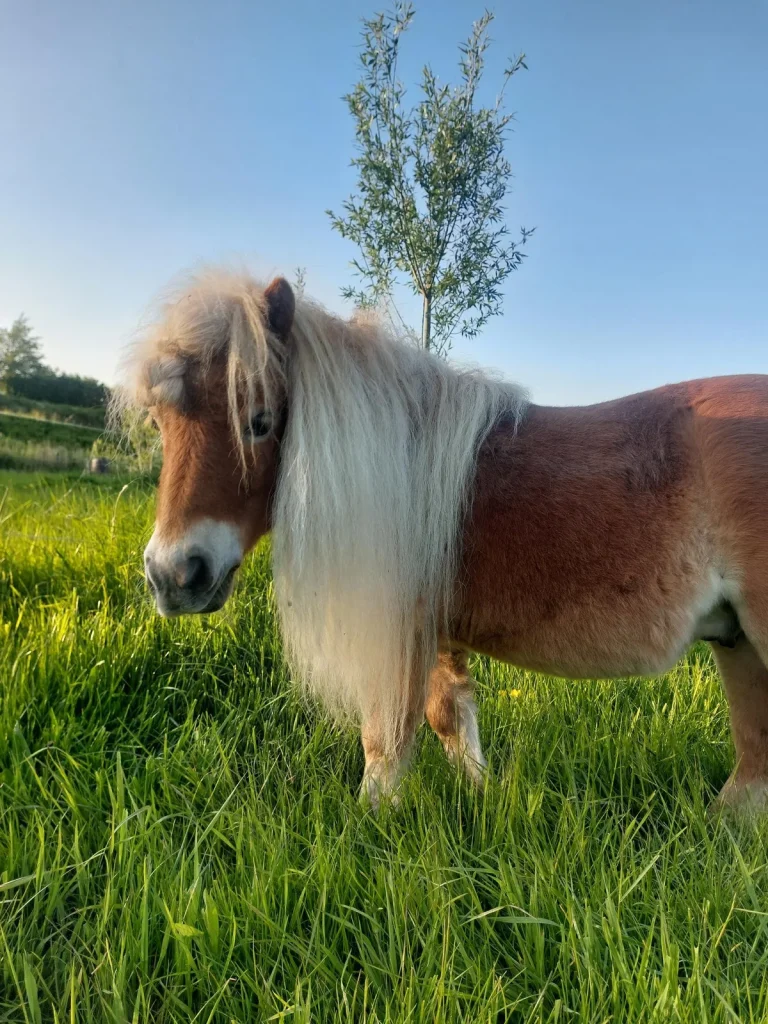
Young, fast-growing grass contains a lot of sugars and fructans: your horse can get surprisingly fat from it, and for sensitive horses it is a risk factor (see grass and sugars: what you need to know). Older, more mature grass is higher in fibre with less energy, but has better fibre quality for the gut. Grass growth depends strongly on soil temperature: below 5 to 8 degrees it does not grow, and above 25 degrees or during drought, growth stagnates. The sugar and fructan content fluctuates daily with temperature, fertiliser, humidity and sunshine. High levels can lead to laminitis. You can monitor the fructan levels per day via this link.
Hay
Hay is dried grass and contains 80 to 90% dry matter. Thanks to drying it keeps for a long time, certainly a year and a half, which makes it the most commonly used forage as the basis of daily nutrition. The quality and nutritional value of hay depend on the type of grass, the moment of mowing and the drying process itself. Good hay has a slightly greenish-yellow colour, smells fresh and does not feel dusty or musty. During drying and storage, some of the vitamins are lost. That is why it is important to provide a vitamin supplement (balancer). If you want to know exactly what is in your batch of hay, you can have it tested. See what a forage analysis is.
Haylage
Haylage is freshly mown grass that is ensiled: fermented and packed airtight, so that (unlike hay) it does not need to be dried for long. Cow silage is too wet and too rich. For horses you need pre-dried haylage, which is dried before it is packed. The dry matter content is usually between 50 and 75%. Once opened, it must be fed within 3 to 5 days to prevent mould and spoilage, which makes it less practical for small-scale use than hay. It generally contains more energy than hay, and is therefore less suitable for horses with a low workload or a tendency to become overweight. Also
Why this matters when feeding
Whichever forage you choose, how you offer it makes just as much difference as what you offer. Unrestricted access to feed often leads horses to eat too quickly and too much; see feeding hay: which method suits your stable for an overview of feeding methods, including how a slow feeder helps. Curious about the full background? Read why a slow feeder matters.