
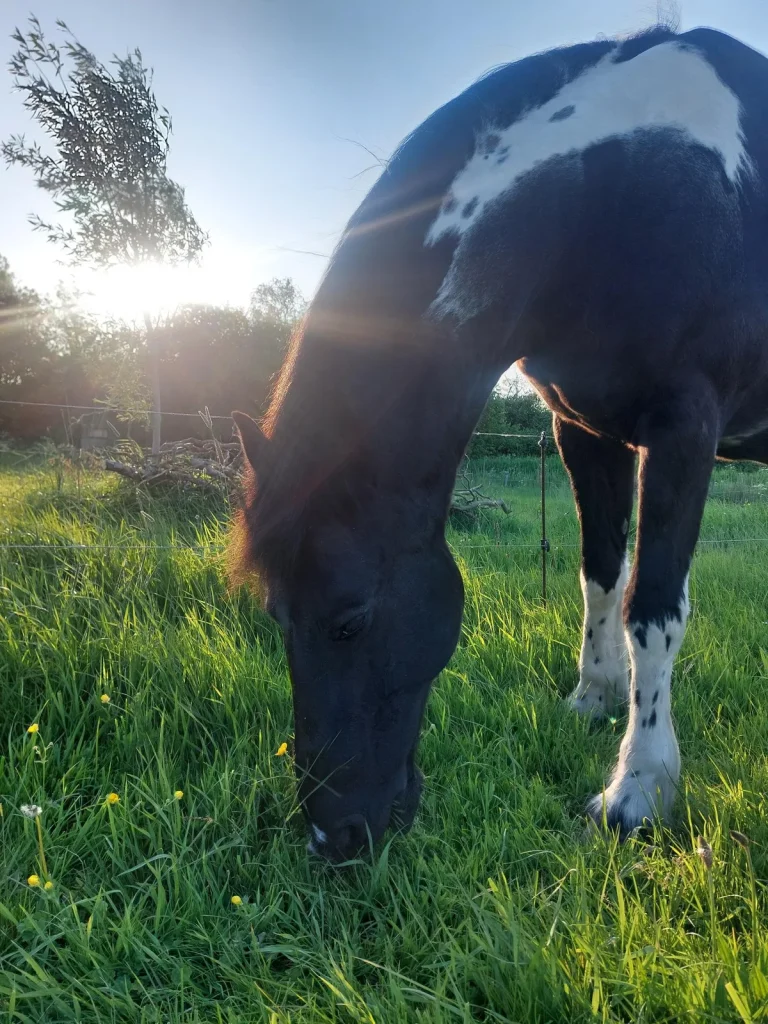
Sugar in grass is one of the most underestimated risk factors in horse nutrition. It is always there, in varying amounts, and for some horses it makes a real difference to their health. See also the different types of forage for the wider context.
Why the sugar content changes throughout the day
The sugar content of grass is not the same all day. In the afternoon and evening it is generally at its highest, because during the day the grass produces sugars through photosynthesis and stores them. Early in the morning the level is lowest, because the grass uses these sugars overnight to grow. The exception is cold nights (below 5 degrees), because grass then does not grow and therefore does not use sugar. Season, temperature and stress on the grass (drought, frost) also play a role: early spring pastures and grass in autumn can, for example, be unexpectedly rich in sugar.
What is fructan?
Using sunlight, water and CO2 (photosynthesis), grass makes sugars. These are the fuel for the plant. When the grass cannot grow directly, for example due to drought or cold, it converts sugars into fructan.
Fructan consists of long chains of fructose molecules that the horse cannot digest in the small intestine the way it digests direct sugars (glucose). Instead, they ferment in the large intestine, and it is precisely that fermentation that can cause problems when there is too much.
Risks of too much sugar
- Laminitis: fermentation in the large intestine becomes disrupted, leading to inflammation and pain in the hooves, with lameness as a result
- Gas colic: due to excessive gas formation during fermentation
- Insulin resistance (IR): the body responds less well to insulin after repeated sugar spikes
- Equine Metabolic Syndrome (EMS): a metabolic condition, linked to overweight and an increased risk of laminitis
- Overweight: weight gain and fat deposits, particularly on the crest, belly and tail base.
- PSSM: a muscle condition that can worsen with sugar intake
- Other: reduced fertility, skin problems (sweet itch) and behavioural changes
What can you do about it?
Managing sugar intake starts with knowing what is in your pasture and your hay. A forage analysis gives hard figures for that, instead of guesswork. For sensitive horses, it also helps to slow down the eating speed: calm, spread-out eating from a net with small mesh results in a more even intake, rather than large, fast portions. You can read why that eating speed makes such a difference in why a slow feeder matters.